TCAS advisoriesCessna Citation CJ4Reception source: ADS-B, ICAO address
Citation CJ4 N257DV and Boeing 767 in a TCAS advisory
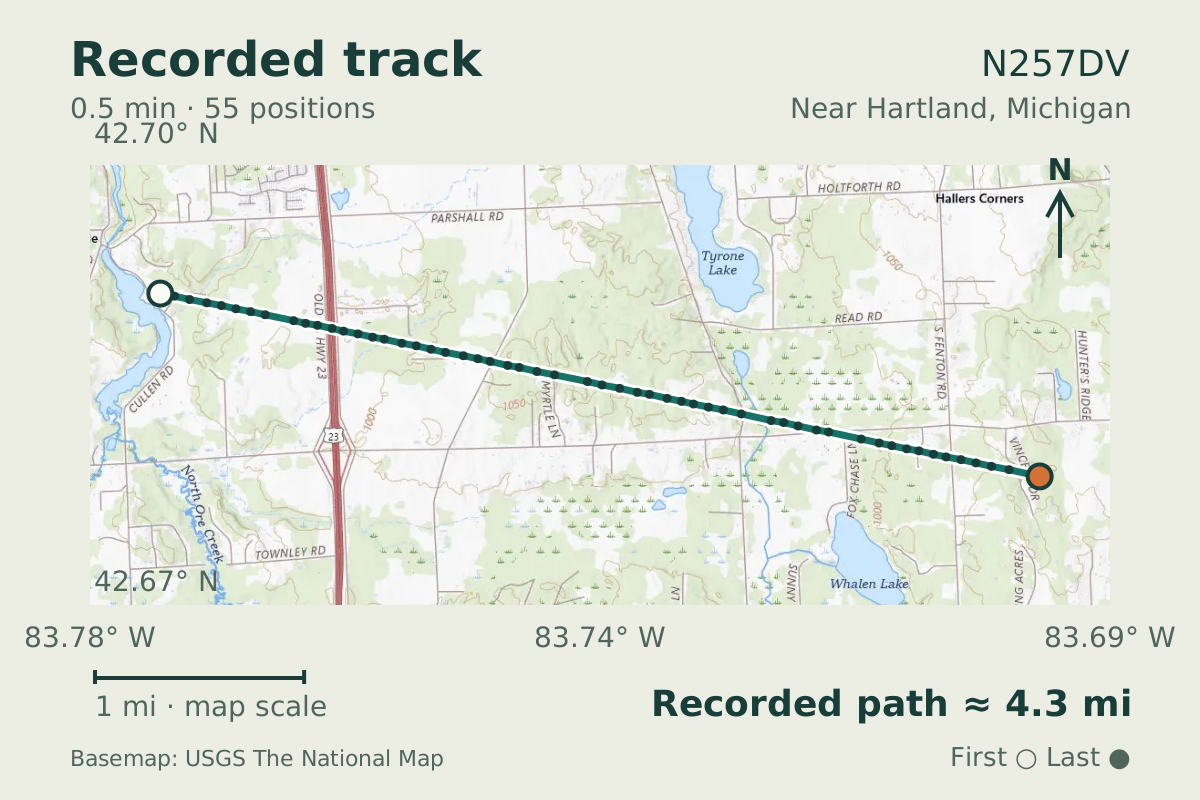
The closest horizontal spacing was 2.5 nautical miles, with about 1,000 feet vertically between the aircraft.
- Replay time · UTC
- —
- Last saved report · UTC
- —
- Recorded path
- —
- Reported ground speed
- —
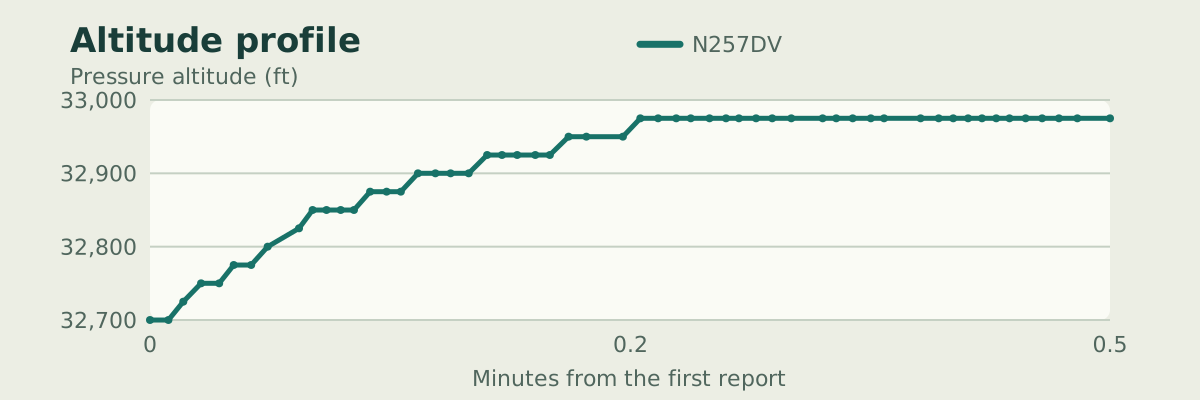
- Archived altitude
- —
The dot moves between saved positions. Readings are from the last saved report. Recorded path is approximate and excludes gaps. Distances use nautical miles (nmi); speed uses knots (nmi per hour).
About the Cessna Citation CJ4
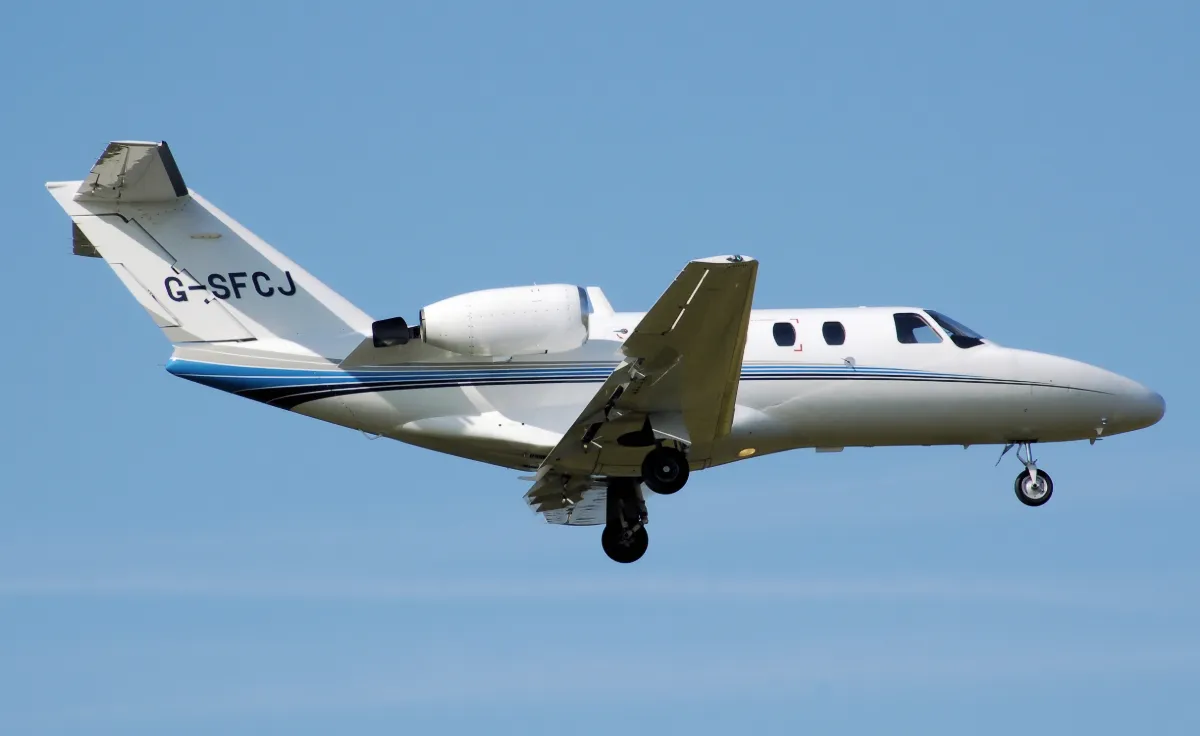
A "Level Off" TCAS advisory accompanied an encounter between N257DV and C-GDUZ on October 4, 2026. Their closest horizontal spacing was 2.5 nautical miles, with about 1,000 feet of vertical separation at that point. The aircraft database identifies the pair as a Cessna Citation CJ4 and a Boeing 767-300, respectively.
A TCAS resolution advisory is an automatic collision-avoidance instruction; this broadcast alone does not establish a near miss or a loss of separation. After the advisory, the Citation's vertical rate decreased by 2,112 feet per minute.
Why this was our weekly pick
The Citation CJ4 earned FAA certification in 2010, and its Gen2 update retained the 525C designation while introducing redesigned cabin fittings and entry stairs.
The 525C behind the CJ4 name
Aircraft type background
The Cessna Citation CJ4 achieved Federal Aviation Administration type certification in 2010 and European Aviation Safety Agency type certification in 2011. Textron Aviation introduced the CJ4 Gen2 on February 9, 2021, retaining the 525C aircraft designation. That continuity is worth noticing: a new generation name can describe changes within an existing aircraft type. The Gen2 announcement focused on cabin comfort and access, including redesigned stairs and seating options. These details belong to the Gen2 update and should not be assumed for every CJ4. [1] [2]
Engineering beyond the cabin trim
Aircraft type background
Textron Aviation's 2023 Gen2 product card lists two Williams International FJ44-4A engines, each rated at 3,621 pounds of thrust. It gives an aircraft length of 53 feet 4 inches and a wingspan of 50 feet 10 inches. The same document identifies electrically heated windscreens, single-point refueling and an externally serviceable lavatory. Those systems make the Gen2 worth examining beyond its interior finishes: the manufacturer's description includes provisions for windscreen heating and ground servicing alongside the more visible cabin changes. [3]
What changed inside
Aircraft type background
The 2021 Gen2 introduction brought entry stairs with a lower starting point and handrail support. Cabin choices included a folding single side-facing seat, a fixed two-place couch or a folding two-place couch with additional storage. Textron's European announcement also described wireless control of cabin lighting, temperature and window shades through a mobile device. Its 2023 product card listed CoolView skylights and an optional lavatory sink and vanity. The optional equipment and alternative seating arrangements explain why the Gen2 name alone does not specify one complete interior configuration. [1] [2] [3]
What remains uncertain
- The aircraft type comes from a database match. These sources describe the type; they do not independently identify this airframe or establish its mission, occupants or reason for flying.
- Research was gathered after the observation. Historical aircraft metadata may have changed; the recorded reports remain separate from the background above.
Research sources
- Textron Aviation unveils the Citation CJ4 Gen2, the next generation in the industry leading Cessna Citation line-up — Textron Aviation. Aircraft type background; not this airframe or flight. Accessed .
- Textron Aviation names first Cessna Citation CJ4 Gen2 European customer — Textron Aviation. Aircraft type background; not this airframe or flight. Accessed .
- Citation CJ4 Gen2 product card (2023) — Textron Aviation. Aircraft type background; not this airframe or flight. Accessed .
Recorded data for N257DV
| Observed | to |
|---|---|
| Event type | Transponder reports |
| Recorded source | ADS-B, ICAO address |
| Post date | |
| Last revised |
| Aircraft type | CESSNA 525C Citation CJ4 |
|---|---|
| Type designator | C25C |
| Tail number (registration) | N257DV |
| Callsign | N257DV |
| ICAO address | A271DE |
| Aircraft named in the advisory | C-GDUZ · ACA7303 · B763 ICAO address C04EB6 Source: ADS-B, ICAO address Closest horizontal separation between the aircraft: 2.5 NM Vertical separation at closest approach: 1,025 ft |
|---|
Measurements
Displayed measurements may be rounded.
- Ground speed
- 466.8 kn
- speed over the ground; wind adds to or subtracts from it
- Pressure altitude
- 32,975 ft
- pressure altitude, the figure pilots and controllers use
All measurements and the evidence record
| Ground speed | 466.8 kn |
|---|---|
| Pressure altitude | 32,975 ft |
| Geometric altitude | 33,675 ft |
| Archived altitude; reference not retained | 32,975 ft |
| Geometric-altitude vertical rate | 192 ft/min |
| Callsign | N257DV |
|---|---|
| Transponder code | 3146 |
| Distinct reports after collapsing repeats | 11 samples |
|---|---|
| Closest horizontal separation between the aircraft | 2.5 NM |
| Vertical separation at closest approach | 1,025 ft |
| Aircraft involved | 2 aircraft |
| Vertical-rate change after the advisory | -2,112 ft/min |
| Episode duration | 31 s |
| Telemetry samples | 16 samples |
| Resolution advisory text | Level Off |
Evidence version: 0351645dc75631f2.
Record details
Public event ID: 9ac858a9-9696-49.
Record revision: 10.