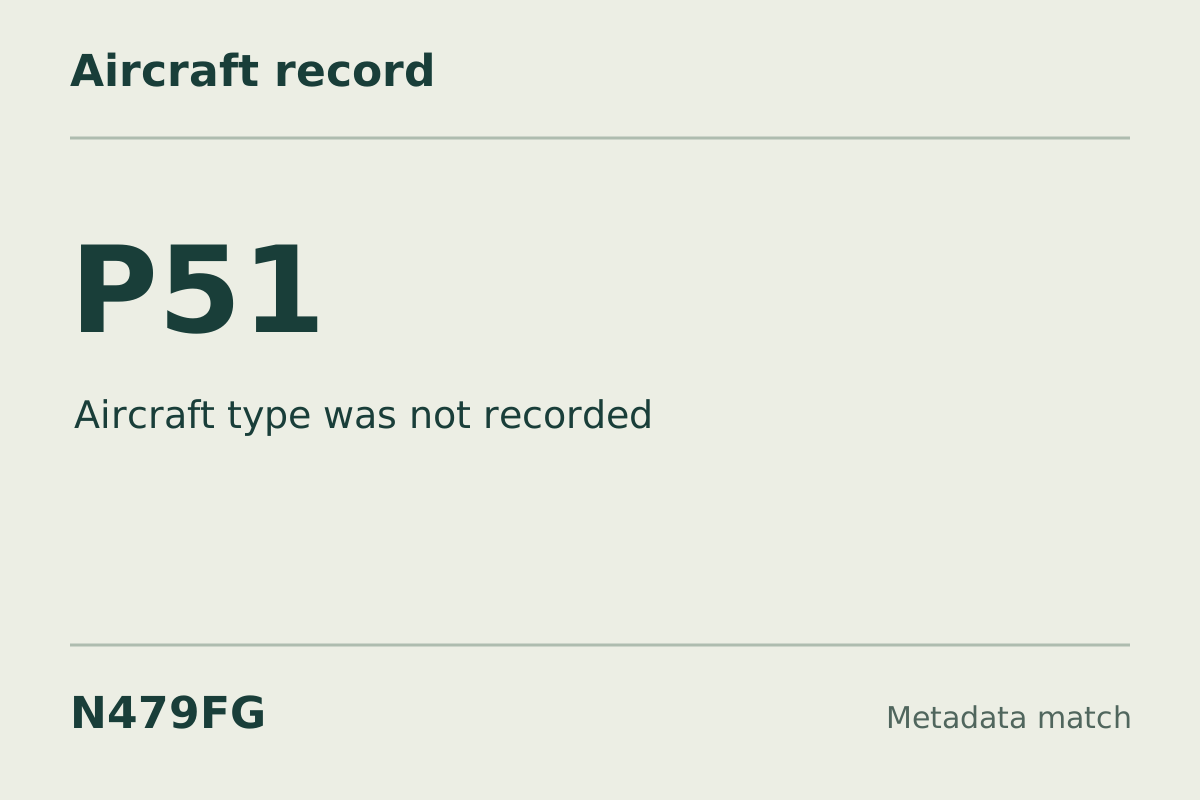
N479FG: P51 type match
The saved aircraft database identifies this aircraft as P51. The type match does not independently verify its historical assignment or the purpose of this flight.
Why this was our weekly pick
A P-51 match leads to a striking engineering story: a change of engine transformed the Mustang’s high-altitude performance.
A design on a short schedule
Aircraft type background
In 1940, British purchasing agents asked North American Aviation to build Curtiss P-40 fighters. The company instead proposed a new design, and its NA-73 airframe was completed 117 days later. It first flew on October 25, 1940, with an Allison liquid-cooled engine. The British ordered 150 and named it the Mustang. That quick start makes the type’s origins worth noticing: it began as a proposed alternative, not a licensed P-40. [1]
The engine change
Aircraft type background
Early Mustangs used Allison engines, which the National Museum of the U.S. Air Force says limited the P-51A’s high-altitude performance. In 1942, British and American testing put Merlin engines in Mustang airframes. The museum reports that a U.S. test aircraft reached 441 mph at 29,800 feet, about 100 mph faster than the P-51A at that altitude. Merlin-powered P-51B and P-51C models followed. The change helps explain why “P-51” can refer to markedly different performance across variants. [2]
A visible variant difference
Aircraft type background
The P-51D introduced a bubble canopy after the rear fuselage was lowered to make room for it, according to the National Air and Space Museum. The D also increased the armament from four to six .50-caliber machine guns. Those details belong to the P-51D, not every Mustang. For aviation observers, the canopy offers a practical reminder to identify the variant before attaching a feature or specification to the broader type. [1] [2]
What remains uncertain
- The aircraft type comes from a database match. These sources describe the type; they do not independently identify this airframe or establish its mission, occupants or reason for flying.
- Research was gathered after the observation. Historical aircraft metadata may have changed; the recorded reports remain separate from the background above.
Research sources
- North American P-51D Mustang | National Air and Space Museum — Smithsonian Institution. Aircraft type background; not this airframe or flight. Accessed .
- North American P-51D Mustang | National Museum of the U.S. Air Force — National Museum of the U.S. Air Force. Aircraft type background; not this airframe or flight. Accessed .
Recorded observation
| Observed | to |
|---|---|
| Event type | Unusual aircraft |
| Recorded source | ADS-B, ICAO address |
| Post date | |
| Last revised |
| Type designator | P51 |
|---|---|
| Tail number (registration) | N479FG |
| ICAO address | A5E30D |
Measurements and times
Displayed measurements may be rounded.
| Ground speed | 212 kn |
|---|---|
| Archived altitude; reference not retained | 7,500 ft |
| Transponder code | 0000 |
Record details
Public event ID: 64d7af29-6914-49.
Record revision: 2.
Evidence version: ac43be462ab8fd3e.