N161PR: DC3 type match
The saved aircraft database identifies this aircraft as DOUGLAS DC-3 Dakota. The type match does not independently verify its historical assignment or the purpose of this flight.
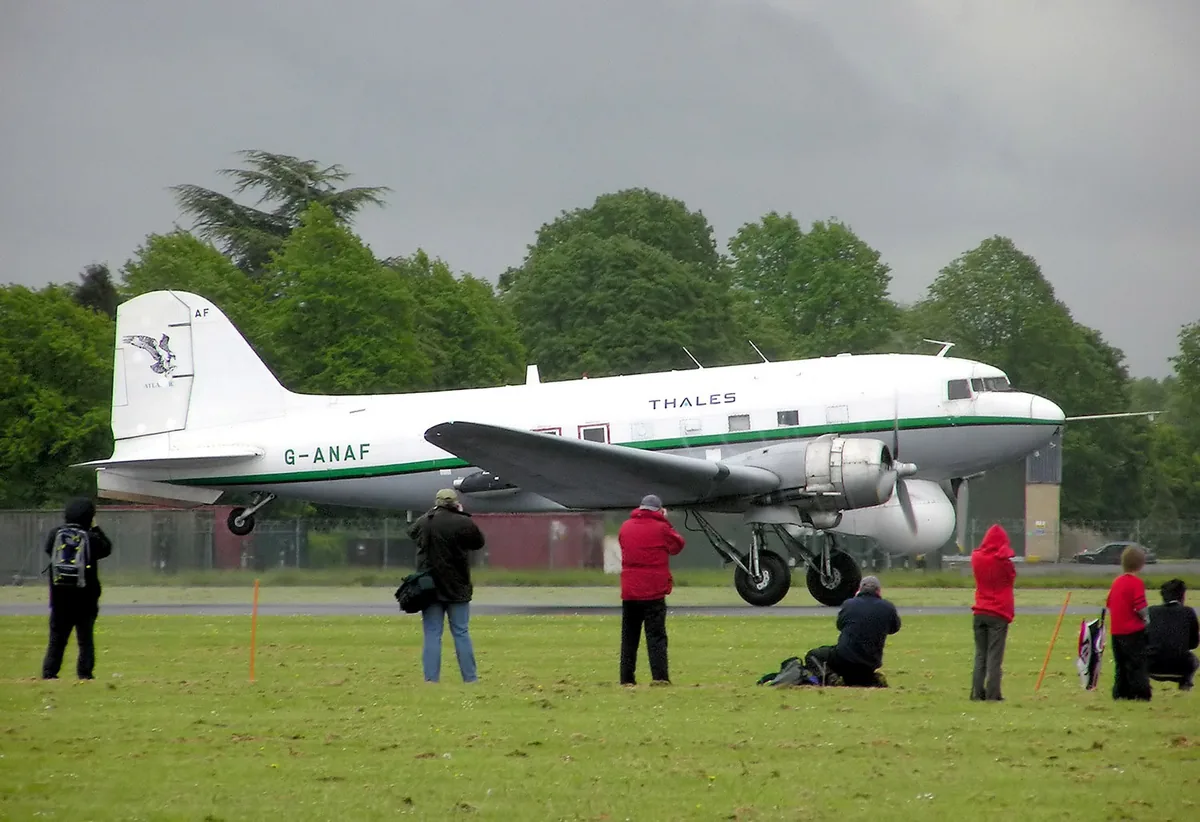
Why this was our weekly pick
The DC-3’s swept outer wing panels had a specific purpose: putting the wing’s aerodynamic center in the right place as the design grew.
A passenger aircraft built around a business case
Aircraft type background
The Douglas DC-3 first flew on December 17, 1935. Douglas developed it from the DC-2 era of airliners, with an eye to carrying more passengers economically and comfortably. Its 21-seat daytime version grew out of the Douglas Sleeper Transport, which had berths for overnight travel. The DC-3’s all-metal construction, cantilever wings, retractable landing gear and cowled radial engines combined features that made it a modern transport for its time. The Smithsonian notes that the aircraft was the first airliner to fly profitably without government subsidy. That makes the DC-3 worth noticing as a design whose passenger capacity and operating economics helped airlines rely less on mail revenue. [1]
A wing change with a specific job
Aircraft type background
The DC-3’s sweptback outer wing panels were not intended for the high-speed reasons associated with later jet aircraft. A NASA history of aircraft design explains that Douglas engineers used the sweep to move the aerodynamic center into a better position relative to the aircraft’s center of gravity, which had ended up farther aft than expected as the design developed. The source says the change helped the aircraft cruise at 185 mph at 10,000 feet with a full load of 21 passengers. That detail is a useful reminder that a familiar visual feature can have a very specific design purpose. Military derivatives such as the C-47 were related to the DC-3, but they had distinct designations; equipment or modifications described for a C-47 should not automatically be attributed to every DC-3. [2]
What remains uncertain
- The aircraft type comes from a database match. These sources describe the type; they do not independently identify this airframe or establish its mission, occupants or reason for flying.
- Research was gathered after the observation. Historical aircraft metadata may have changed; the recorded reports remain separate from the background above.
Research sources
- Douglas DC-3 | National Air and Space Museum — Smithsonian Institution. Aircraft type background; not this airframe or flight. Accessed .
- Chapter 3: The Design Revolution — On a Streamline to the DC-3 — NASA. Aircraft type background; not this airframe or flight. Accessed .
Recorded observation
| Observed | to |
|---|---|
| Event type | Unusual aircraft |
| Recorded source | ADS-B, ICAO address |
| Post date | |
| Last revised |
| Aircraft type | DOUGLAS DC-3 Dakota |
|---|---|
| Type designator | DC3 |
| Tail number (registration) | N161PR |
| ICAO address | A0F6BA |
Measurements and times
Displayed measurements may be rounded.
| Archived altitude; reference not retained | 6,650 ft |
|---|---|
| Transponder code | 0000 |
Record details
Public event ID: 28ca5539-c7fe-4d.
Record revision: 2.
Evidence version: 0aedfc432f4898af.