87-0027: C5M type match
The saved aircraft database identifies this aircraft as Lockheed C-5M Super Galaxy. The type match does not independently verify its historical assignment or the purpose of this flight.
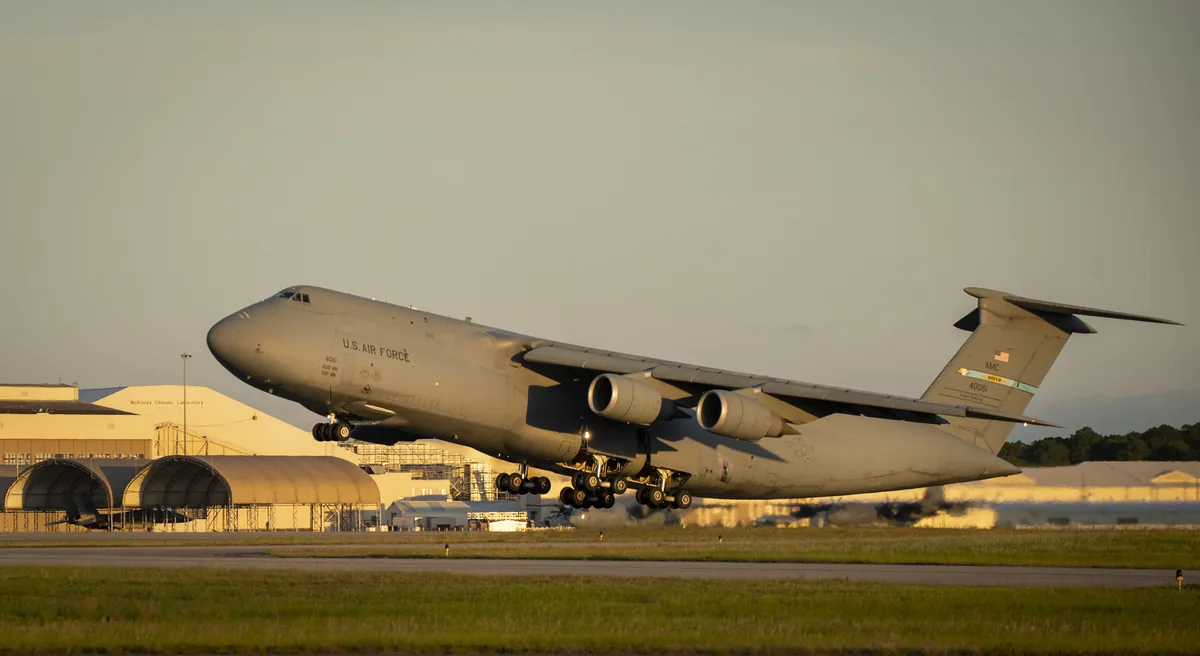
Why this was our weekly pick
The C-5M shows how a long-established transport design gained a new chapter through major cockpit, systems and engine upgrades.
A cargo hold built for access
Aircraft type background
The C-5 design lets cargo crews work from both ends: the nose and rear doors open, and full-width ramps allow vehicles to drive aboard. That arrangement can make loading and unloading more flexible than a hold accessible from one end. The aircraft has five sets of landing gear with 28 wheels, a detail that reflects the demands of supporting a very large transport. These are features of the C-5 family described by the Air Force, rather than equipment unique to the C-5M. [1]
A modernized Galaxy
Aircraft type background
The C-5M is a modernized version of the C-5, and the designation follows two upgrades: the Avionics Modernization Program and the Reliability Enhancement and Re-engining Program. The Air Force began its avionics modernization effort in 1998. It updated communications, navigation and surveillance systems, and added a new autopilot. The re-engining program replaced the earlier TF-39 engines with GE CF6-80C2-L1F engines. The C-5M therefore combines a long-established airframe with changes to its cockpit systems and propulsion. [1]
A dated engineering milestone
Aircraft type background
The first flight of the C-5M took place on June 19, 2006, at Dobbins Air Reserve Base, Georgia. The Air Force reported that the new engines provide 22 percent more thrust than the previous engines, alongside a shorter takeoff roll and faster climb. Those figures describe the engine upgrade cited for the C-5M, not every C-5 variant. For an observer, the type is worth noticing as a visible example of a major transport design kept in use through substantial systems and engine changes. [1] [2]
What remains uncertain
- The aircraft type comes from a database match. These sources describe the type; they do not independently identify this airframe or establish its mission, occupants or reason for flying.
- Research was gathered after the observation. Historical aircraft metadata may have changed; the recorded reports remain separate from the background above.
Research sources
- C-5M Super Galaxy — U.S. Air Force. Aircraft type background; not this airframe or flight. Accessed .
- C-5 still going strong after 38 years — U.S. Air Force. Aircraft type background; not this airframe or flight. Accessed .
Recorded observation
| Observed | to |
|---|---|
| Event type | Unusual aircraft |
| Recorded source | Multilateration (MLAT) |
| Post date | |
| Last revised |
| Aircraft type | Lockheed C-5M Super Galaxy |
|---|---|
| Type designator | C5M |
| Tail number (registration) | 87-0027 |
| ICAO address | AE0578 |
Measurements and times
Displayed measurements may be rounded.
| Archived altitude; reference not retained | 39,000 ft |
|---|---|
| Transponder code | 0000 |
Record details
Public event ID: e56934a9-cec1-4a.
Record revision: 2.
Evidence version: 23ae3e88305e36b3.